
Crime, SPAM & Prison Games
All books feature a description of the game, rules of play, and include cards to cut up for play as well as blank cards so you can create your own.

GAME DETAILS
TRIAL! is a game in a book in which players assume the roles of the prosecution, defense, witnesses, judge, and jury, and try a case developed from key bits of evidence.
At the end of the trial, members of the jury vote on the outcome. The defense wins if the accused is acquitted; the prosecution wins if the accused is found guilty; and the members of the jury win if they vote the way the majority does.
If there’s a tie, there is a hung jury, and nobody wins.
The game includes Role Cards, Verdict Cards, Charge Cards, Crime Location Cards, Crime Time Cards, and Incriminating Evidence Cards.
For 6 or more players, 12 to adult.
GAME DETAILS
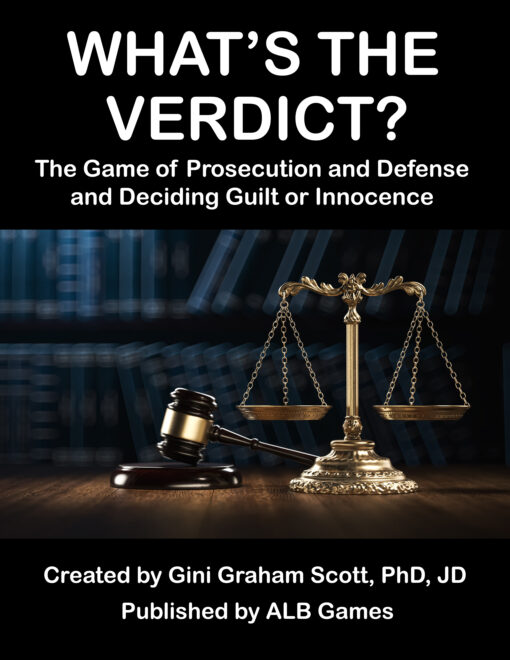
What’s the Verdict? is a game in a book in which players get a chance to play prosecutor and defense attorney in some real criminal cases.
Then, as members of the jury, players vote on who made the best case and what they think happened in the real case.
For 3-12 players, age 12 to adult.
The game includes Court Calendar Cards, Secret Ballot Cards, Charge Cards, Prosecution and Defense Cards, Final Justice Cards, and Prosecution and Defense Witness Lists.
If possible, print them on card stock, though this is not necessary. Plus add your own Scoring Chips, which could be beans, poker chips, or other small objects.
The book includes the rules and cards you need to play. You just have to print out the game cards and cut them up.

GAME DETAILS
In response to a question card, players describe what happened, why, what led up to the crime, or what happened next.
In response to an action card, players perform an action as the criminal, cop, observer, or reporter at the scene.
The book features a description of the game, rules of the play, and cards to cut up and use in playing the game.
Additionally, there are blank cards to create your own cards.

GAME DETAILS
In THE SCAM GAME, players answer questions or perform actions based on hundreds of scams.
They describe how different scams work and how to avoid them, and some players may take on the role of scammers, cops, newspaper reporters, or others in scenes depicting scammers trying to scam victims.
The book features a description of the game, rules of the play, and cards to cut up and use in playing the game. Additionally, there are blank cards so you can create your own cards.

GAME DETAILS
Players seek to get out of prison by gaining points, and at the end of the game, the player with the most points wins and gets out of prison.
Players gain points for good behavior and positive actions of the guards or staff and lose points for bad behavior and negative actions of the guards or staff.

GAME DETAILS
Players answer questions or perform actions based on what life is like in prison.
They discuss and act out day to day activities, relationships with other prisoners and guards, support groups, educational programs, recreation, and more.
The book features a description of the game, rules of the play, and cards to cut up and use in playing the game.
Additionally, there are blank cards so you can create your own cards.

GAME DETAILS
Players seek to have good relationships with wives, girlfriends, and other inmates and gain points when their relationships go well, but they can lose points for problems they experience.
Along the way, family members, friends, guards, and staff members can help or hinder their relationships, and at the end of the game, the player with the most points wins.
GAME DETAILS
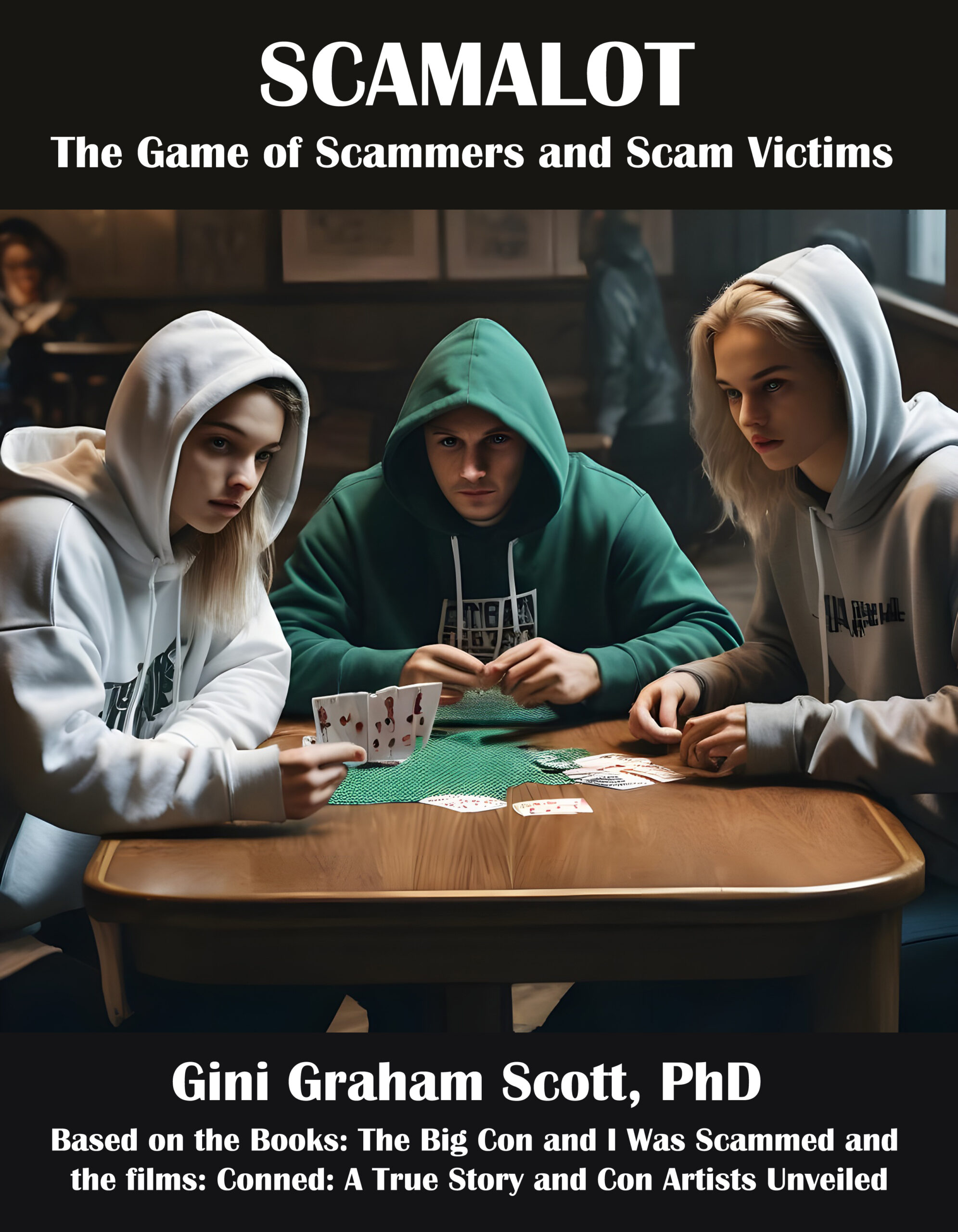
Players are potential scam victims, seeking to avoid scams and protect themselves from being scammed. Players can make up their own rules, too.
The book features a description of the game, rules of the play, and cards to cut up and use in playing the game.
Additionally, there are blank cards so you can create your own cards.
GAME DETAILS
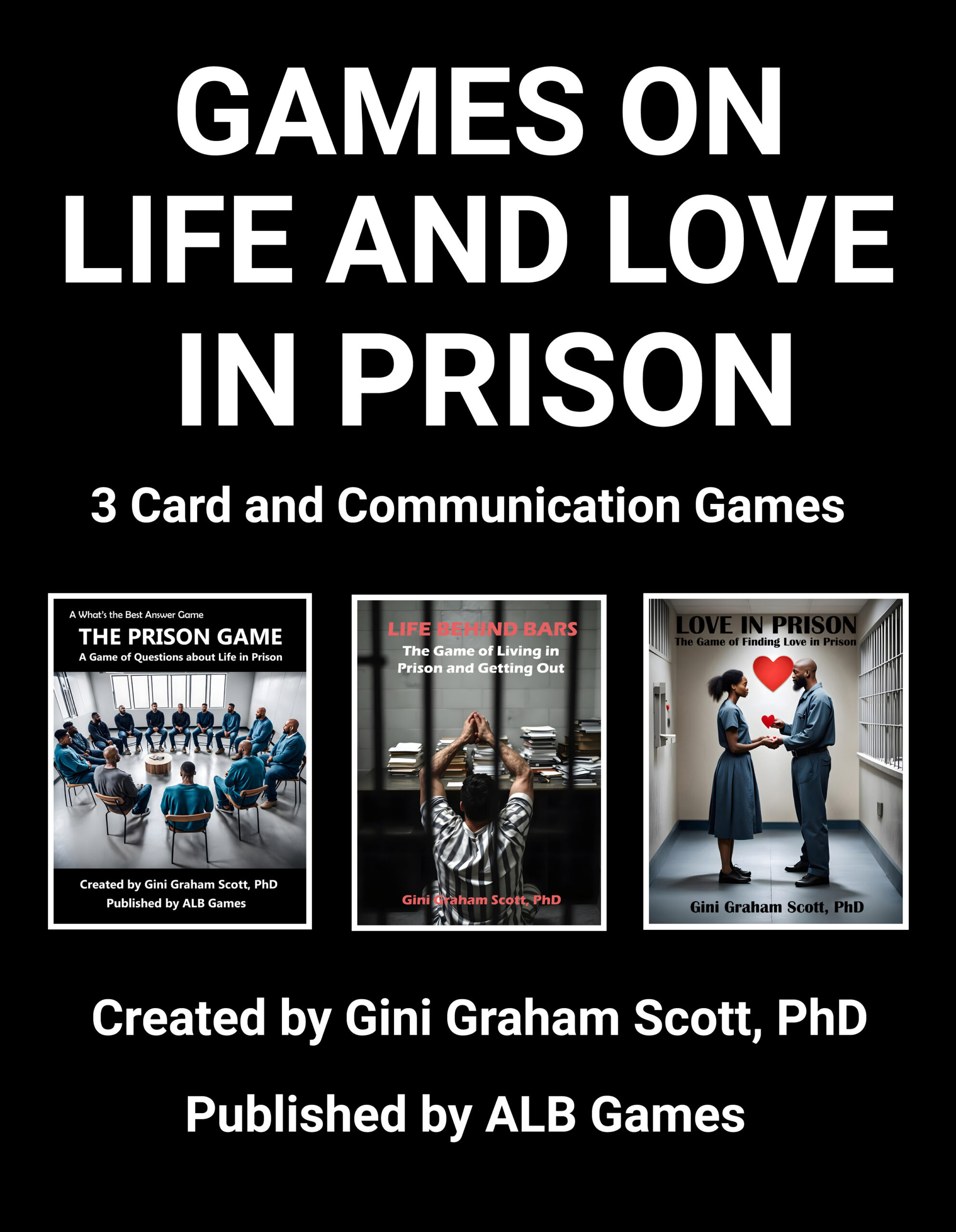
GAMES ON LIFE AND LOVE IN PRISON features three games on this topic – The Prison Game, Life Behind Bars, and Love in Prison.
In The Prison Game, players answer questions or perform actions based on what life is like in prison. They discuss and act out day-to-day activities, relationships with other prisoners and guards, support groups, educational programs, recreation, and more.
In Life Behind Bars, players seek to get out of prison by gaining points, and at the end of the game, the player with the most points wins and gets out of prison. Players gain points for good behavior and positive actions of the guards or staff and lose points for bad behavior and negative actions of the guards or staff.
In Love in Prison, players seek to have good relationships with wives, girlfriends, and other inmates and gain points when their relationships go well, but they can lose points for problems they experience.
Along the way, family members, friends, guards, and staff members can help or hinder their relationships, and at the end of the game, the player with the most points wins.
GAME DETAILS
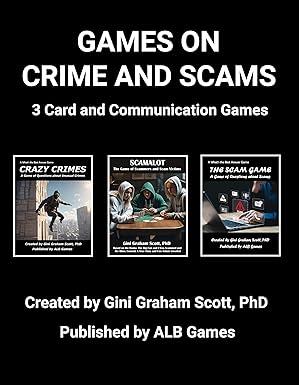
GAMES ON CRIME AND SCAMS features three games on this topic – Crazy Crimes, Scamalot, and The Scam Game.
In Crazy Crimes, in response to a Question Card, players describe what happened, why, what led up to the crime, or what happened next. In response to an Action Card, players perform an action as the criminal, cop, observer, or reporter at the scene.
In Scamalot, players are potential scam victims, seeking to avoid scams and protect themselves from being scammed.
In The Scam Game, players answer questions or perform actions based on hundreds of scams. They describe how different scams work and how to avoid them, and some players may take on the role of scammers, cops, newspaper reporters, or others in scenes depicting scammers trying to scam victims.
Each of these games features a description of the game, rules of the play, and cards to cut up and use in playing the game.
Additionally, there are blank cards so you can create your own cards.